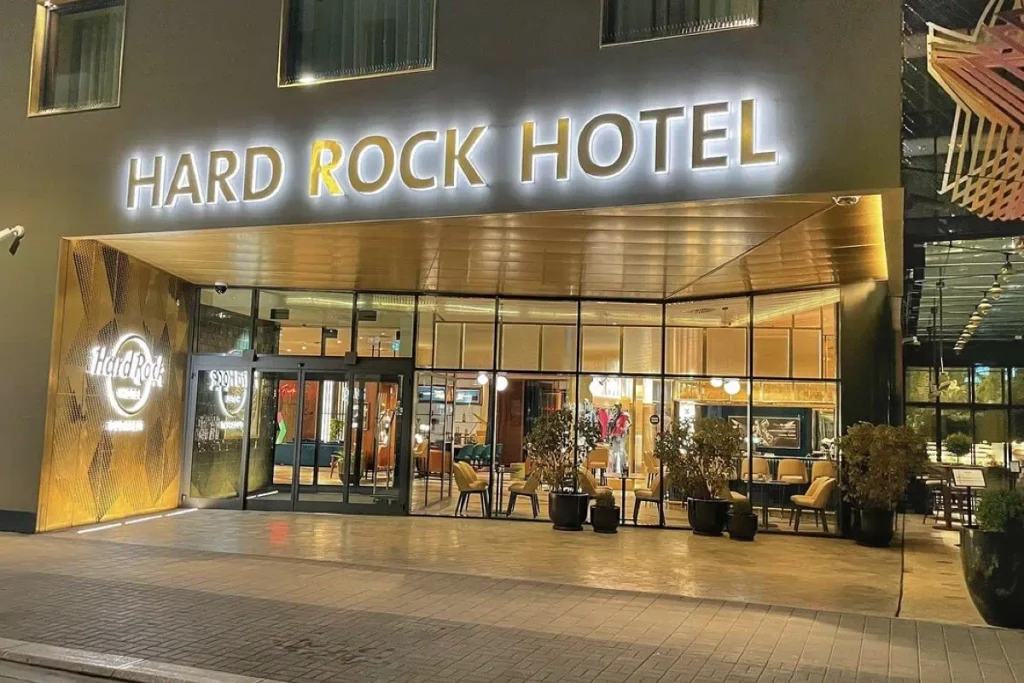
A few months ago, we received an inquiry from the manager of a prestigious four-star hotel. You could hear it in his voice: he wasn’t just looking for information — he needed a real solution.
“Our guests constantly complain about the TVs, and my staff are slowly burning out from spending half their workday helping guests turn the TVs on.”
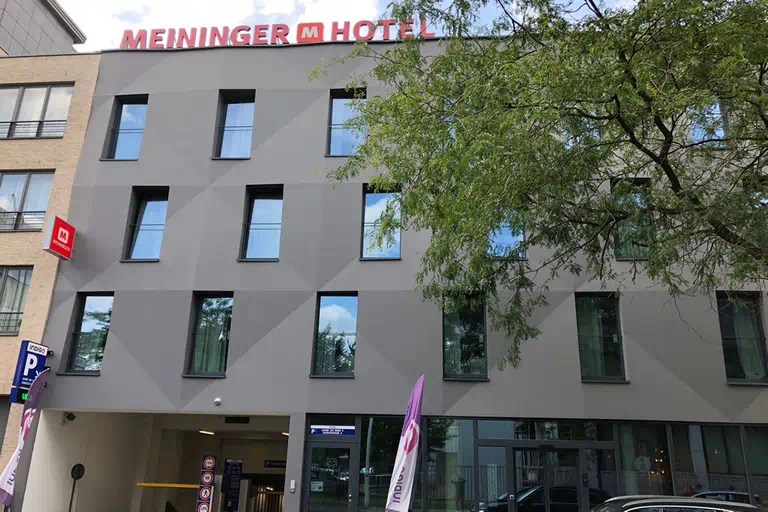
Then came the on-site survey. The building itself was beautiful and modern, everything looked fine from the outside. The antennas, headend system, and structured network were professionally built, the installation was exemplary. The nightmare began once we entered the guest room: the TV simply wouldn’t turn on.
The hotel was using an IPTV system with set-top boxes. Remote in hand, press the ON button — nothing. Again, harder — still nothing. Phone support from maintenance finally explained the trick: you had to hold the power button for 10 seconds while pointing the remote behind the TV so the IR sensor could “catch” the signal. At that moment, I fully understood the manager’s concern.
Then came the menu system. Slow, confusing, and half the channels were missing. The system had been installed 11 years ago using what was then considered state-of-the-art IPTV technology: UTP cabling, consumer-grade televisions, and IPTV set-top boxes in every room. But time had caught up with the boxes — they had become slow, the remotes needed replacement, and the guests were understandably dissatisfied.
And not only the guests. According to the manager, the hotel staff were spending 4–5 hours every day dealing with TV-related issues. At that point, it was no longer an inconvenience — it had become an operational problem.
Trying to solve the issue themselves without consulting a specialist, the hotel purchased 110 new consumer TVs. What they didn’t realize was that the real problem wasn’t the televisions — it was the outdated set-top boxes. Unsurprisingly, nothing changed except that the TVs looked newer.
That’s when we got involved. We presented the manager with two possible solutions:
- Migration to a complete HotelTV system.
A modern solution with IPTV-capable, centrally managed televisions. However, this would have required purchasing another full set of TVs and represented a significant investment — something the hotel understandably did not want to undertake only a few months after buying 110 new televisions. - COE solution (Coax Over Ethernet).
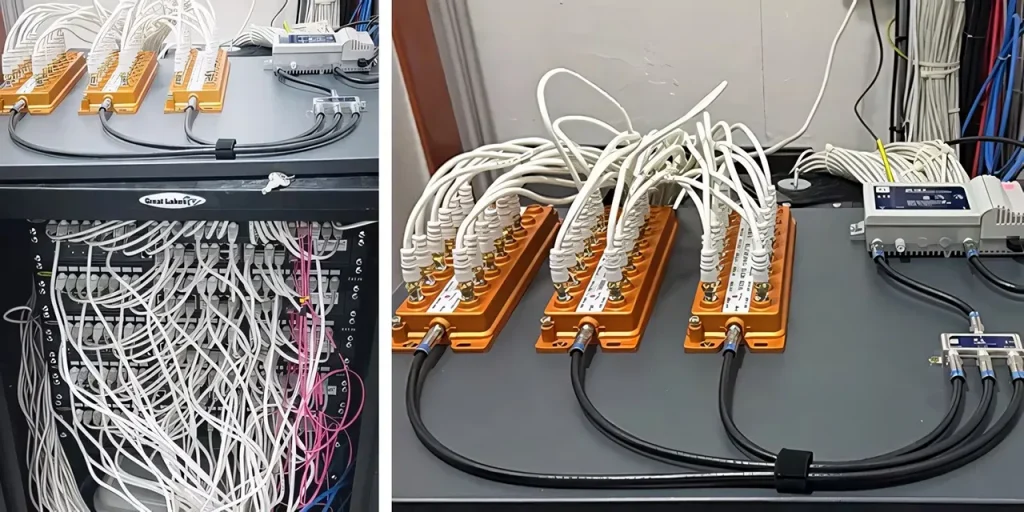
We kept the existing UTP cabling infrastructure in place, but created coax distribution inside the floor rack cabinets with proper signal amplification. The signal was then patched through using COE cables. The set-top boxes were completely removed from the rooms, and the televisions were connected directly using the COE cabling solution.
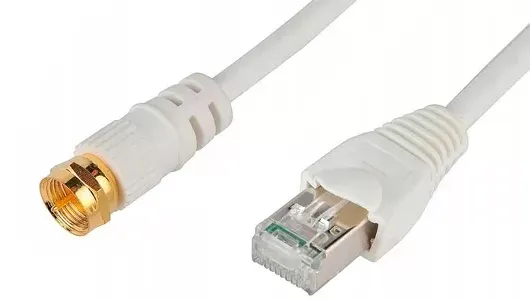
What is COE?
COE (Coax Over Ethernet) makes it possible to transmit RF (radio frequency) signals over UTP/FTP cabling, effectively replacing traditional coaxial cables.
It does not perform signal conversion — cable TV signals do not become IPTV signals. Instead, COE provides optimal impedance matching between the different cable types.
The solution contains a built-in balun transformer that matches the 100-ohm balanced UTP cable to the 75-ohm unbalanced coaxial system. This ensures minimal signal loss and reflection, resulting in stable and reliable signal transmission.
The manager ultimately chose the second option — the COE solution. He realistically recognized that it offered the best balance between cost and practical results.
Implementation of the COE solution
The old headend system was replaced with a new hybrid model capable of delivering signals simultaneously over coax and IP. This also ensures an easy transition back to IPTV in the future if the televisions are later upgraded. Floor by floor, signal amplifiers and RF splitters were installed together with the COE cabling infrastructure. The set-top boxes were completely removed from the guest rooms.
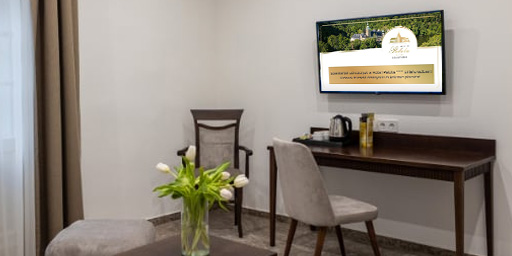
Using COE adapters, the TVs were connected directly through their RF inputs, allowing guests to use the televisions just like they would at home.
The result
With the new system:
- the number of available TV channels was doubled.
- the hotel’s maintenance staff finally got relief, and the daily TV-related interventions disappeared.
- everything now works perfectly with a single remote control.
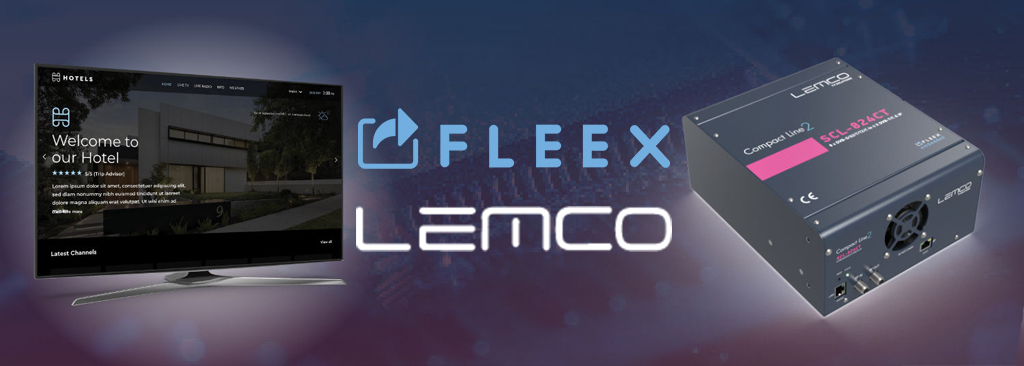
- as an added benefit, the hotel also received its own HotelTV information channel displaying custom hotel marketing and informational content.
And what did it cost?
Almost exactly the same as purchasing 110 new IPTV boxes — except this investment delivered an outstanding guest experience instead of just replacing outdated hardware.
P-SAT Hungary Kft. has been a specialist in hotel TV systems for more than 20 years. Countless Hungarian and international hotels have chosen our solutions — from luxury hotels in Budapest to countryside wellness resorts.

Our goal is to help our partners deliver not only comfort, but a true guest experience — while also increasing their revenue.
👉 Request a free consultation from the experts at P-SAT Hungary Kft.