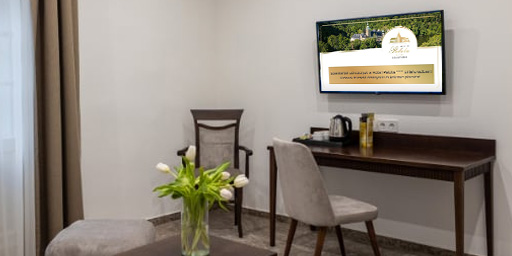
A new wing was recently added to a renowned private clinic in Budapest: modern patient rooms, operating theatres, diagnostic facilities — everything high-tech, polished, and state of the art.
Except for the TV system. Because that didn’t work.
In the old wing, television channels were provided by One Hungary through a traditional coaxial network. But during the planning of the new building, someone assumed that by 2025 “everything runs over UTP anyway,” so only FTP cabling was installed for the TVs — no coaxial cabling at all. The project was completed exactly according to those plans: walls finished, painted, everything ready for handover.
Then came the moment when the provider’s technicians arrived to connect the TV signal in the new wing. That’s when the hidden problem exploded. Their answer was simple: “We deliver the signal over coax. If there’s no coax, there’s no signal.” That was the classic stomach-dropping moment for the client. Re-cabling the entire wing with coaxial wiring simply wasn’t an option. This was a fully operating clinic, where opening walls again would have seriously disrupted day-to-day medical operations.
That’s when we were contacted.
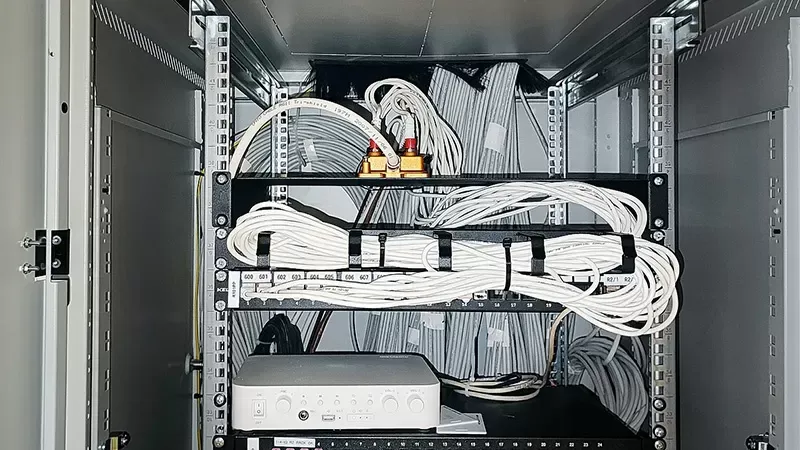
We inspected the site and cabling, and proposed the COE solution, which was specifically designed for exactly this type of situation.
The farthest TV set was approximately 40 meters from the rack cabinet — a routine distance for us, as we have successfully bridged even 80-meter runs using this technology.
What is COE?
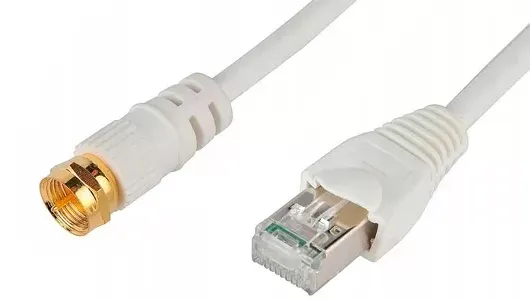
COE (Coax Over Ethernet) makes it possible to transmit RF (radio frequency) signals over UTP/FTP cabling, effectively replacing traditional coaxial cables.
It does not perform signal conversion — cable TV signals do not become IPTV signals. Instead, COE provides optimal impedance matching between the different cable types.
The solution contains a built-in balun transformer that matches the 100-ohm balanced UTP cable to the 75-ohm unbalanced coaxial system. This ensures minimal signal loss and reflection, resulting in stable and reliable signal transmission.
We also accounted for attenuation: FTP cabling has slightly higher losses than coaxial cable, but this can easily be compensated with a high-quality antenna amplifier. The signal was injected into the FTP network, and at the endpoints it was converted back to RF using COE balun adapters, then connected to the TVs’ antenna inputs. And that’s when the “magic” happened — or rather, the expected professional result. The service provider’s technicians initially looked at the system with some skepticism, but once they saw a perfectly stable signal even at the furthest endpoint, their feedback changed noticeably — and so did the atmosphere.
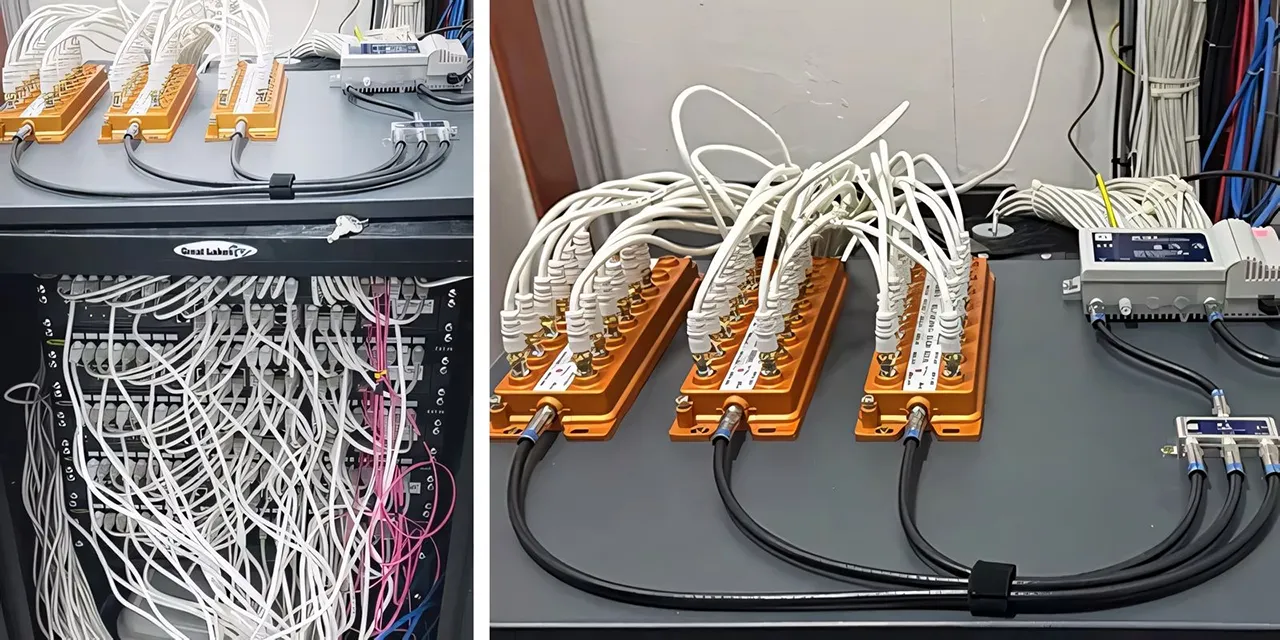
Here is an excerpt from the project manager’s email:
To my knowledge, there has not really been a case where we delivered a hotel TV service over UTP using adapters. However, since we were informed that all cabling was already in place and there was no need to install coaxial wiring, we agreed with the team to proceed with testing the connection. Based on the technicians’ feedback, the on-site visit was successful. The 22 CI cards were handed over, and the service was also tested on a device located at the farthest point — everything worked properly.
This case also clearly shows that with a well-considered alternative technology solution, a significant amount of money, time, and frustration can be saved.
👉 Request a free consultation from the experts at P-SAT Hungary Kft.!